How to measure radiation dermatitis
Radiation skin reactions are a result of damage to the basal cell layer of the skin
Predicting the severity of skin reactions can be difficult due to the varying radio-sensitivity of the skin and a number of contributing factors. Intrinsic and extrinsic factors may significantly increase the severity of radiation therapy skin reactions which may delay the healing process.
Individuals with darker skin may notice that the skin in the treatment field starts to darken. Regular skin assessments are essential to ensure that the right interventions are implemented at the right time. The skin reactions of every patient are different which demands a close observation of the patients' side effects.15
First symptoms: 10 – 14 days after the first radiation therapy dose
In general, radiation skin damage can be seen approximately 10–14 days after the first dose of radiation. This corresponds with the time it takes for impaired cells to migrate to the surface of the skin. If the new cells reproduce faster than the old cells are shed, the skin will become dry and flakey (dry desquamation).15
When radiotherapy continues, the body may not produce enough new cells to replace the old ones. As a result, the outer layer of the skin may break and start to ooze – so called moist desquamation has developed.15
The severity of skin reactions may increase for 2 more weeks after the completion of radiation therapy. Each hospital has a different way of managing radiation dermatitis, based on the skin's condition.
Picture: 6. Damaged skin ©Stratpharma.

Radiation dermatitis: scales and grading systems
A number of different systems have been developed to measure and describe the spectrum of radiation dermatitis. The research institutes which define the radiation dermatitis scales include organizations such as the National Cancer Institute (NCI), the Radiation Therapy Oncology Group (RTOG), the World Health Organization (WHO) and the European Organization for Research and Treatment of Cancer (EORTC) to describe the spectrum of radiation dermatitis.
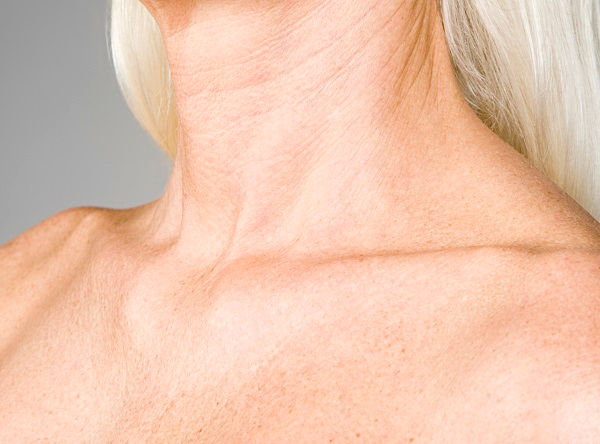
Normal Skin
No visible skin change.
Learn more
"Radiation therapy causes biochemical changes within cells, as the DNA molecules are susceptible to radiation damage during mitosis. Radiobiological damage affects regeneration of the skin by the process of repair, redistribution, repopulation and reoxygenation. Damaged cells are replaced by cells moving from the resting phase into the active cycle (repopulation)."15
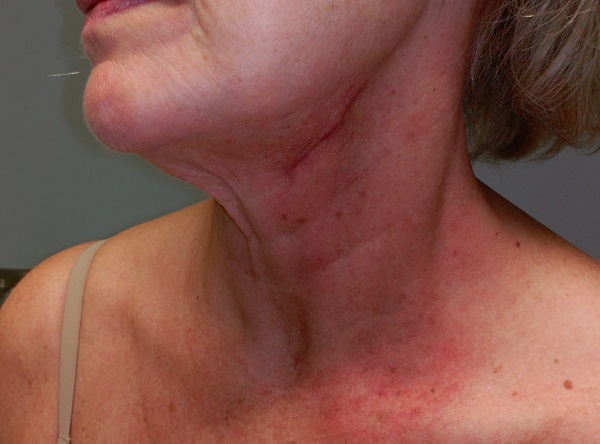
Dull erythema
A faint or dull redness (erythema) occurs. A mild tightness of the skin and itching may occur.
Learn more
"Skin damage occurs when the rate of repopulation of the basal cell layer (Stratum Germinativum) cannot match the rate of cell destruction by treatment. The inflammatory response activated is a normal physiological reaction to radiotherapy. Radiotherapy induced skin damage is seen approximately 10-14 days following the first fraction of radiation."15
Dry desquamation and erythema
A bright redness (erythema)/ dry desquamation occurs. The skin feels sore, itchy and tight.
Learn more
"As the skin is damaged through further exposure to radiation it tries to compensate by increasing mitotic activity in order to replace the damaged cells. However, if the new cells reproduce faster than the old cells are shed then the skin will become dry and flaky (dry desquamation)."15
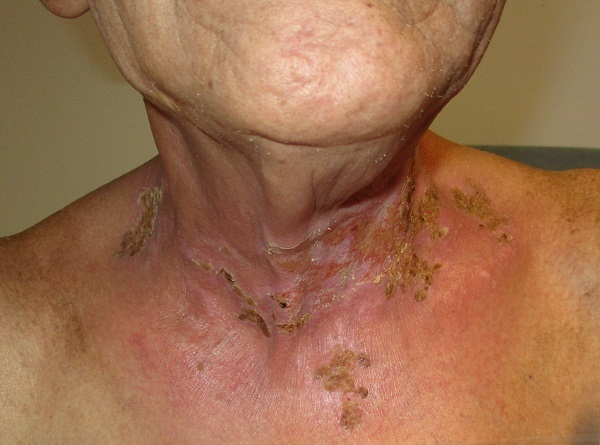
Patchy moist desquamation
Dry desquamation starts to be moist with yellow/pale green exudate. Soreness with oedema is visible.
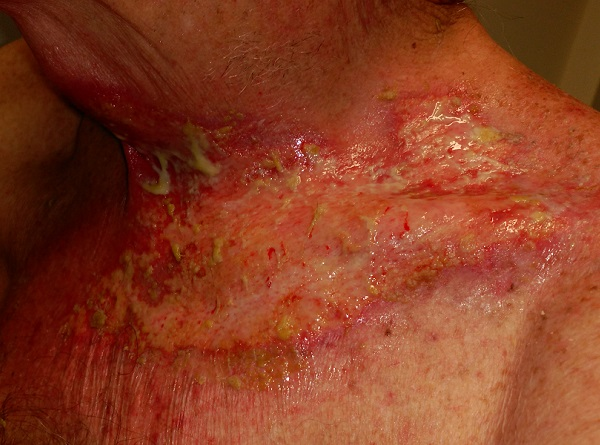
Confluent moist desquamation
What was patchy dry desquamation turns into a confluent moist desquamation. The color of the wound fluid (exudate) is still yellow/pale green. Sore feeling.
Learn more
"As radiation therapy continues, the basal layer cannot produce enough new cells to replace the old ones and therefore the outer layer of the epidermis will break, oedematous with exudate (moist desquamation). The exudate is normal and rich in nutrients which helps the growth of new skin cells."15
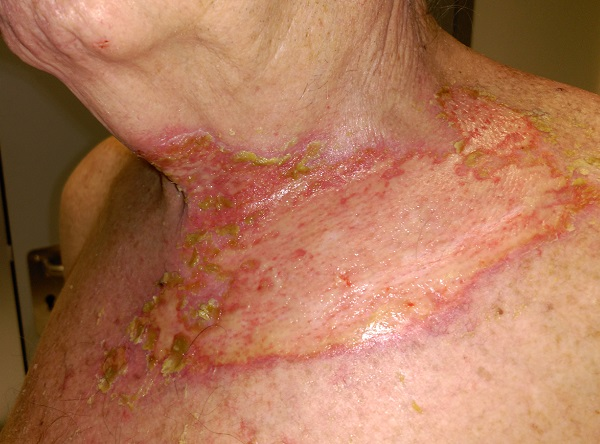
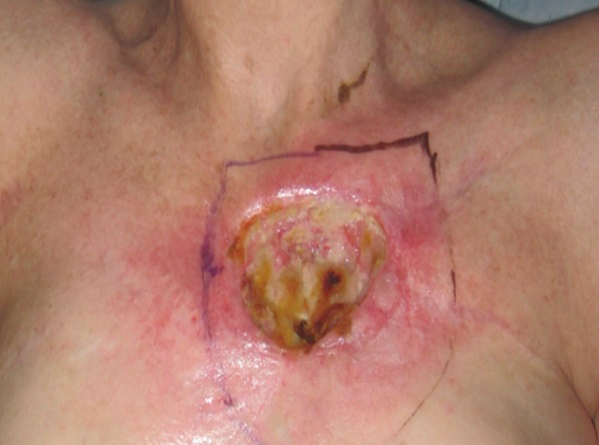
Ulceration and bleeding
Ulceration, bleeding, necrosis (rare).
Learn more
Further progressing moist desquamation can lead to ulcerations and bleeding. “Skin necrosis is rarely seen primarily due to the advanced techniques used in the delivery of radiotherapy.”15