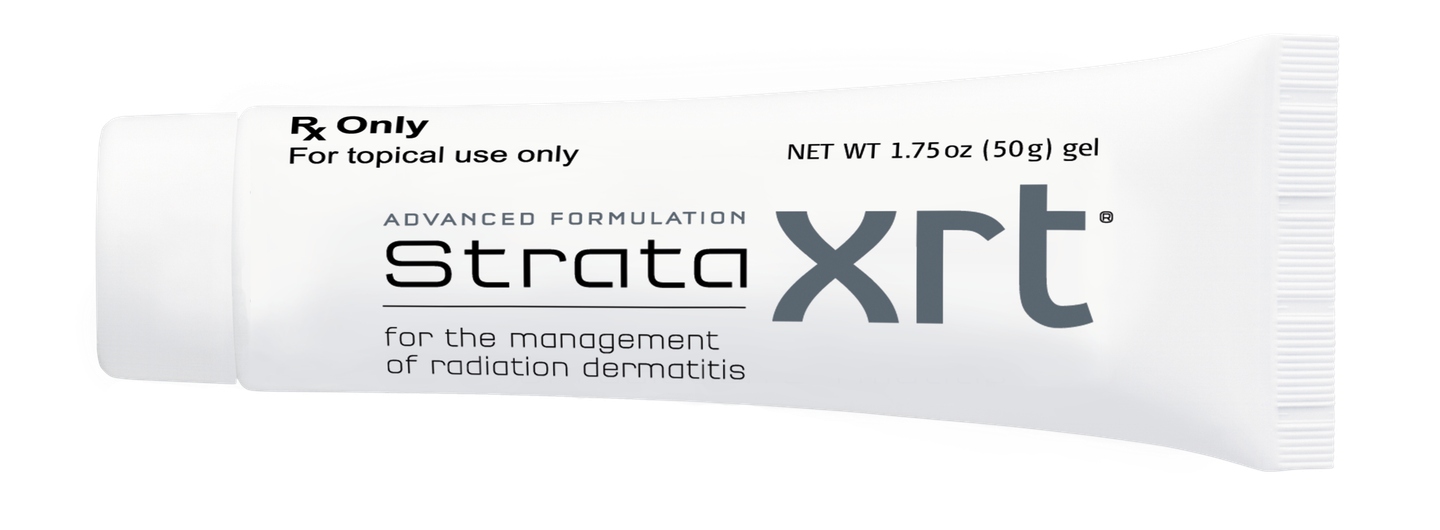
How does radiation therapy affect the skin
During radiation therapy the skin can change significantly
How does radiation therapy affect the skin?
Predicting the severity of skin reactions caused by radiation therapy can be difficult due to the varying radio-sensitivity of skin and other contributing factors. Intrinsic and extrinsic factors may significantly increase the severity of skin reactions. This can delay the cancer treatment and a patient’s healing process.
What skin reactions can occur?
Redness – the skin in the treatment area may resemble a mild to severe sunburn or tan.
Pruritus – itchiness is a normal side effect in the treated area. Scratching can compromise skin integrity.
Inflammation – swelling, pain and heat might occur in the treatment area.
Dry desquamation – the skin in the treatment area may become thicker and very dry. In most cases, the skin peels off similar to what occurs after sunburns.
Moist desquamation – skin cells are destroyed faster than they can grow back. The skin may break down, become wet or infected. This is more common where the skin is very thin or folds such as behind ears, under breasts or neck.
References: 13
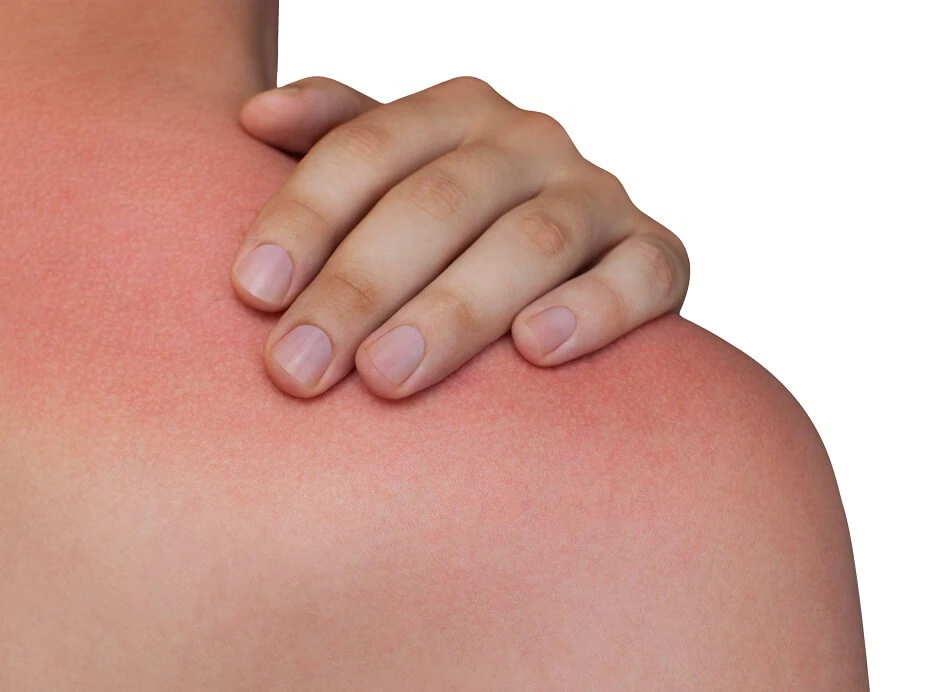
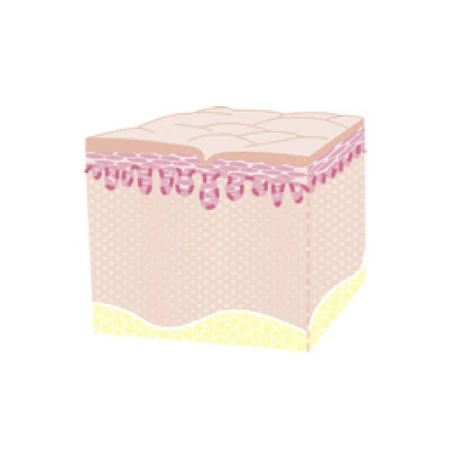
Skin changes caused by radiation therapy.
Radiation therapy starts

After 2 to 3 weeks of radiation therapy
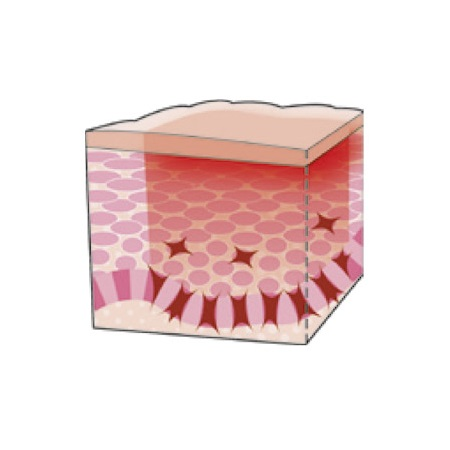
After 4 to 5 weeks of radiation therapy

After 6 to 7 weeks of radiation therapy

1 to 2 weeks after the end of radiation therapy
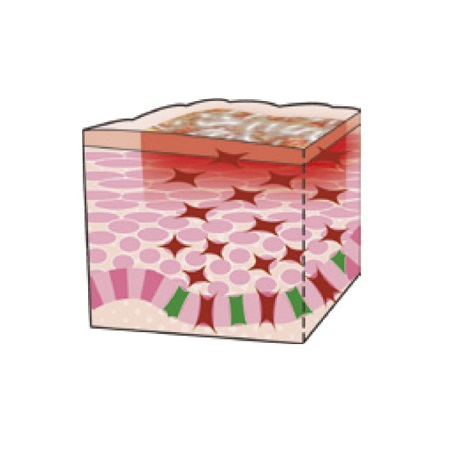
Healed skin
References: 13
Images: 5. The Princess Royal Radiotherapy Review Team