A Stratpharma product
Home / Clinical evidenceClinical research

The evidence
behind StrataXRT.

Explore the studies, clinical reports and publications featured on the StrataXRT website.

Research at a glance

Publication: Kennedy et al. · 2024
Pilot study

Kennedy et al. · 2024

StrataXRT for the prevention of acute radiation dermatitis in breast cancer

Samantha K. F. Kennedy, et al. (2024). StrataXRT for the prevention of acute radiation dermatitis in breast cancer: A pilot study. Supportive Care in Cancer, 32(670)

Read the study
View the original website summary

“StrataXRT® is effective in preventing grade 3 radiation dermatitis in patients, and the most promising results were observed within the prone cohort.”

Publication: Hush et al. · 2024
Case report

Hush et al. · 2024

A patient-designed integrative oncology intervention for stage IV locally recurrent rectal cancer: A case report

Julia M. Hush, Daniel Steffens, Michael J. Solomon, A patient-designed integrative oncology intervention for stage IV locally recurrent rectal cancer: A case report, EXPLORE, Volume 20, Issue 5, 2024, 103004, ISSN 1550-8307

Read the study
View the original website summary

“The gel was applied after every episode of toileting. Throughout and following the course of radiotherapy, the patient was completely free of radiation dermatitis, to the surprise of her radiation oncologist.”

Publication: Lee et al. · 2023
Systematic review & meta-analysis

Lee et al. · 2023

StrataXRT for the prevention of acute radiation dermatitis in breast cancer

Lee, S.F., Shariati, S., Caini, S. et al. StrataXRT for the prevention of acute radiation dermatitis in breast cancer: a systematic review and meta-analysis of randomized controlled trials. Support Care Cancer 31, 515 (2023).

Read the study
View the original website summary

“StrataXRT may help prevent severe acute radiation dermatitis in breast cancer radiotherapy patients.”

Publication: Omidvari et al. · 2022
Randomised clinical trial

Omidvari et al. · 2022

StrataXRT® Effectiveness in Preventing Radiotherapy-Induced Dermatitis in Breast Cancer

Omidvari, S., Eskandari, Z., Nasrollahi, H., Ahmadloo, N., Ansari, M., Hamedi, S. H., Khanjani, N., Kadkhodaei, B., Mosalaei, A., & Mohammadianpanah, M. (2022). The Investigation of Prophylactic Effect of StrataXRT Gel on Radiation-Induced Dermatitis in Breast Cancer Patients: A Randomized Clinical Trial. Middle East Journal of Cancer, 13(2), 293–298.

Read the study
View the original website summary

“StrataXRT® silicone gel compared to the control group significantly prevented and reduced the rate of radiation-induced dermatitis in the patients with breast cancer that peaked at the fifth week of treatment.”

Publication: Ahn et al. · 2020
Pilot randomised trial

Ahn et al. · 2020

Reducing Radiation Dermatitis Using a Film-forming Silicone Gel During Breast Radiotherapy: A Pilot Randomized-controlled Trial

Ahn, et al. (2020). In Vivo, vol. 34 (1), pp. 413–422.

Read the study
View the original website summary

“The use of StrataXRT can reduce radiation dermatitis with respect to objectively measured physiological skin parameters.”

Publication: Blades · 2020
Economic evaluation

Blades · 2020

StrataXRT® cost-effectiveness vs. Sorbolene® (10% Glycerine) in head and neck cancer patients undergoing radiation therapy

Blades, Rae (2020) A cost-effectiveness analysis of a silicone film-forming gel versus 10% glycerine in patients with head and neck cancer. Masters by Research thesis, Queensland University of Technology, Brisbane.

Read the study
View the original website summary

“This study was the first trial-based economic evaluation of interventions for radiation dermatitis and highlighted the importance of undertaking robust economic evaluations to assist healthcare managers in resource allocation decisions. [...]. Practical clinical implications could include use of StrataXRT® for radiation dermatitis in other anatomically challenging areas affected by radiation.”

Publication: Chan et al. · 2019
Randomised controlled trial

Chan et al. · 2019

StrataXRT® superior to standard care in preventing and reducing severity of radiation dermatitis in head and neck cancer patients

Chan, R., Blades,. et al. (2019). A single-blind, randomised controlled trial of StrataXRT® – A silicone-based film-forming gel dressing for prophylaxis and management of radiation dermatitis in patients with head and neck cancer. Radiotherapy and Oncology, 139, pp. 72-78

Read the study
View the original website summary

“StrataXRT ® is superior to Sorbolene® in preventing, delaying, and reducing severity of skin toxicity.”

Publication: Quilis et al. · 2018
Clinical study

Quilis et al. · 2018

StrataXRT® - An Innovative Film-Forming Wound Dressing for Radiation Dermatitis during ongoing radiation therapy

Quilis, A.C., et al. (2018). Reducing radiation dermatitis during ongoing radiation therapy: an innovative film-forming wound dressing. Journal of Radiation Oncology, 7(3), 255-264.

Read the study
View the original website summary

“The use of the innovative film-forming wound dressing for radiation dermatitis treatment shows first time evidence of improving the RISRAS score during ongoing radiation therapy, showing major improvements in patients’ quality of life.”

Publication: Villandiego & Aramberri · 2018
Case series

Villandiego & Aramberri · 2018

The Use of an Innovative Film-Forming Wound Dressing in the Treatment of Radiation Dermatitis during Concomitant Chemotherapy

Villandiego, I.A. and Aramberri, S.G. (2018) The Use of an Innovative Film-Forming Wound Dressing in the Treatment of Radiation Dermatitis during Concomitant Chemotherapy. Journal of Cancer Therapy, 9, 1048-1056.

Read the study
View the original website summary

“In all cases described, the studied wound dressing served as a self-leveling and film-forming dressing preventing trans-epidermal water loss and enabled a moist wound healing environment that is known to promote faster reepithelialisation and reduce the skin’s acute inflammatory response.”

Publication: Ford · 2017
Clinical poster

Ford · 2017

Radiation induced skin reactions: is StrataXRT more effective in the prevention and management of Radiation induced skin reactions (RISR) than standard care? Ford C. (2017) Mid North Coast Cancer Institute (MNCCI) & Mid North Coast LHD, Coffs Harbour NSW

View original poster
View the original website summary

“easy to apply in the early stages of treatment” “Cost analysis showed a saving for the MNCCI budget in the areas of nursing hours performing wound care and supply of materials to patients” “ease of use for staff and patients”

Publication: Smee, Bissell & Malcolm · 2015
Conference report

Smee, Bissell & Malcolm · 2015

Does the use of StrataXRT prevent moist desquamation in NMSC patients treated with superficial radiation therapy in the head & neck area? Smee R., Bissell N., Malcolm N.  (2015) World Congress on Larynx cancer

View original poster
View the original website summary

“using this silicone gel for the prevention and treatment of radiation dermatitis, showed low reactionary scores with minimal radiation dermatitis compared to our observed standard. RTOG 3 was completely prevented in the StrataXRT group.”

Publication: Priyadarshi & Marceau · 2015
Chemical burn case report

Priyadarshi & Marceau · 2015

StrataXRT®: Effective Treatment of Chemical Burns in Extremely Premature Infants

Priyadarshi, A., & Marceau, J. (2015). Aqueous 0.5% Chlorhexidine Induced Chemical Spillage Burns: Use of a Novel Flexible Silicone Dressing Gel. Pediatr Neonatal Nurs, 1 (2).

Read the study
View the original website summary

“We believe that the application of StrataXRT® facilitated healing by re-epithelialisation, acted as a barrier preventing transepidermal water loss and protected the injured fragile skin from friction injuries. [...] We found favourable treatment results with the use of the silicone dressing gel demonstrated as early effective healing with no residual hypertrophic scars.”

See for yourself

Larynx — 19 days 3

Visible improvement after 19 days of using StrataXRT during ongoing radiation therapy. The patient was diagnosed with an advanced epidermal carcinoma of the larynx.

Start of StrataXRT
During radiation therapy
Treatment period
19 days of StrataXRT
Explore the research
Slide to compare
After 19 days
Before treatment
Before treatmentAfter 19 days

Head and neck — 7 days 5

A head-and-neck clinical case from a case study series performed in South Korea.

Start of StrataXRT
Start of treatment with StrataXRT
Treatment period
7 days of StrataXRT
Explore the research
Slide to compare
After 7 days
Start of treatment
Start of treatmentAfter 7 days

Parotid — 29 days 6

Neoplasm of parotid — face. Clínica IMQ Zorrozaurre, Bilbao, Spain. StrataXRT was started at radiation session 21. The follow-up photograph was taken on post-radiation day 18, after 29 days of treatment.

Start of StrataXRT
Radiation session 21
Treatment period
29 days of StrataXRT
Explore the research
Slide to compare
After 29 days
Start of treatment
Start of treatmentAfter 29 days

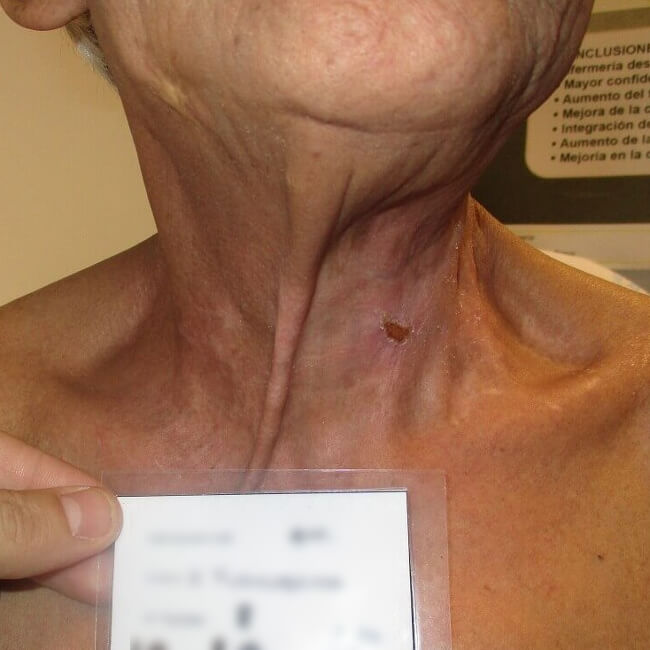
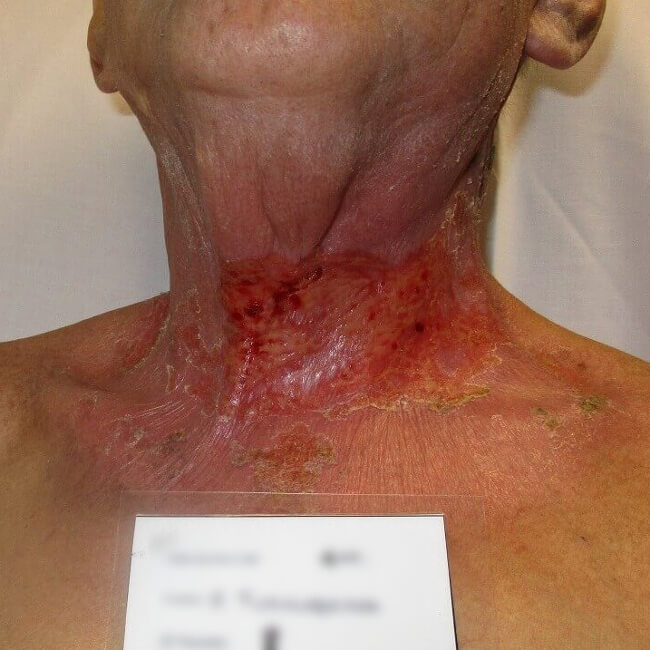
Neck — 18 days 3

A case from a five-patient series conducted in Spain during concomitant chemotherapy. StrataXRT was started at radiation session 21; the follow-up photograph was taken on post-radiation day 4, after 18 days of treatment.

Start of StrataXRT
Radiation session 21
Treatment period
18 days of StrataXRT
Explore the research
Slide to compare
After 18 days
Start of treatment
Start of treatmentAfter 18 days
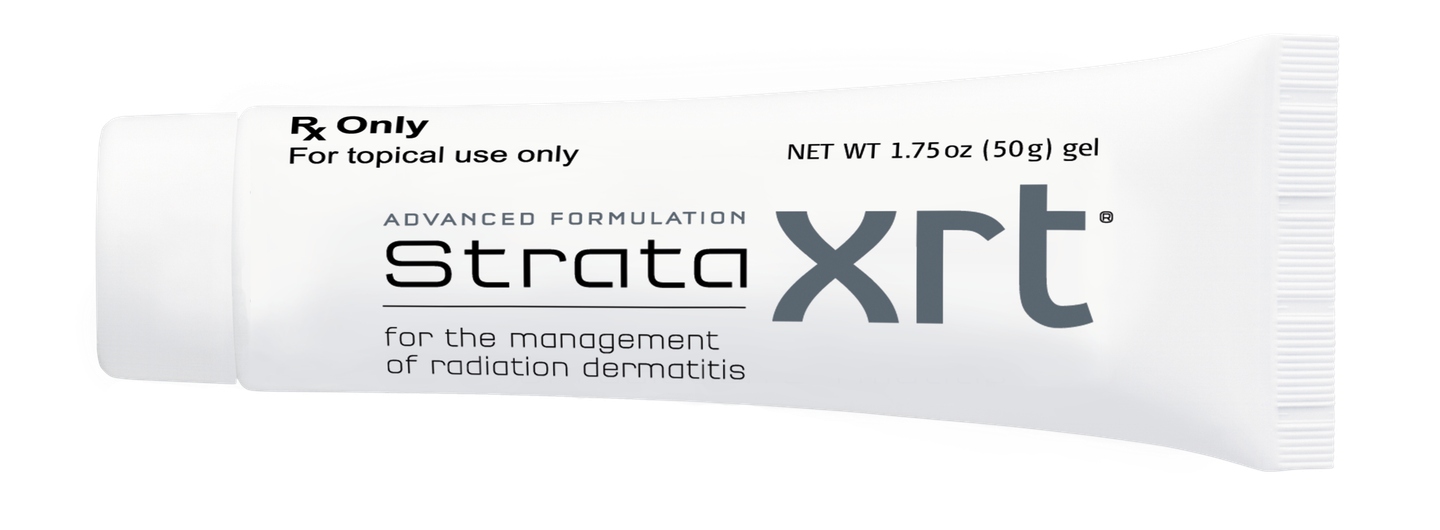
StrataXRT 1.75 oz (50 g) Rx
StrataXRT

Prescriber information

Please contact your healthcare provider for the StrataXRT prescription.

Prescriber information

Country and language

Choose the website for your market.

StrataXRT

Your location

You are visiting the United States StrataXRT website.

Product information may vary by country. Please choose the website for your place of residence.

Cookie preferences

Essential storage is always on. You can change optional choices here at any time.

Search this website